La decisión que cambió al Barça: por qué Laporta eligió a Guardiola y no a Mourinho
Noticias guardadas · Las noticias se guardan en la sesión de este navegador.
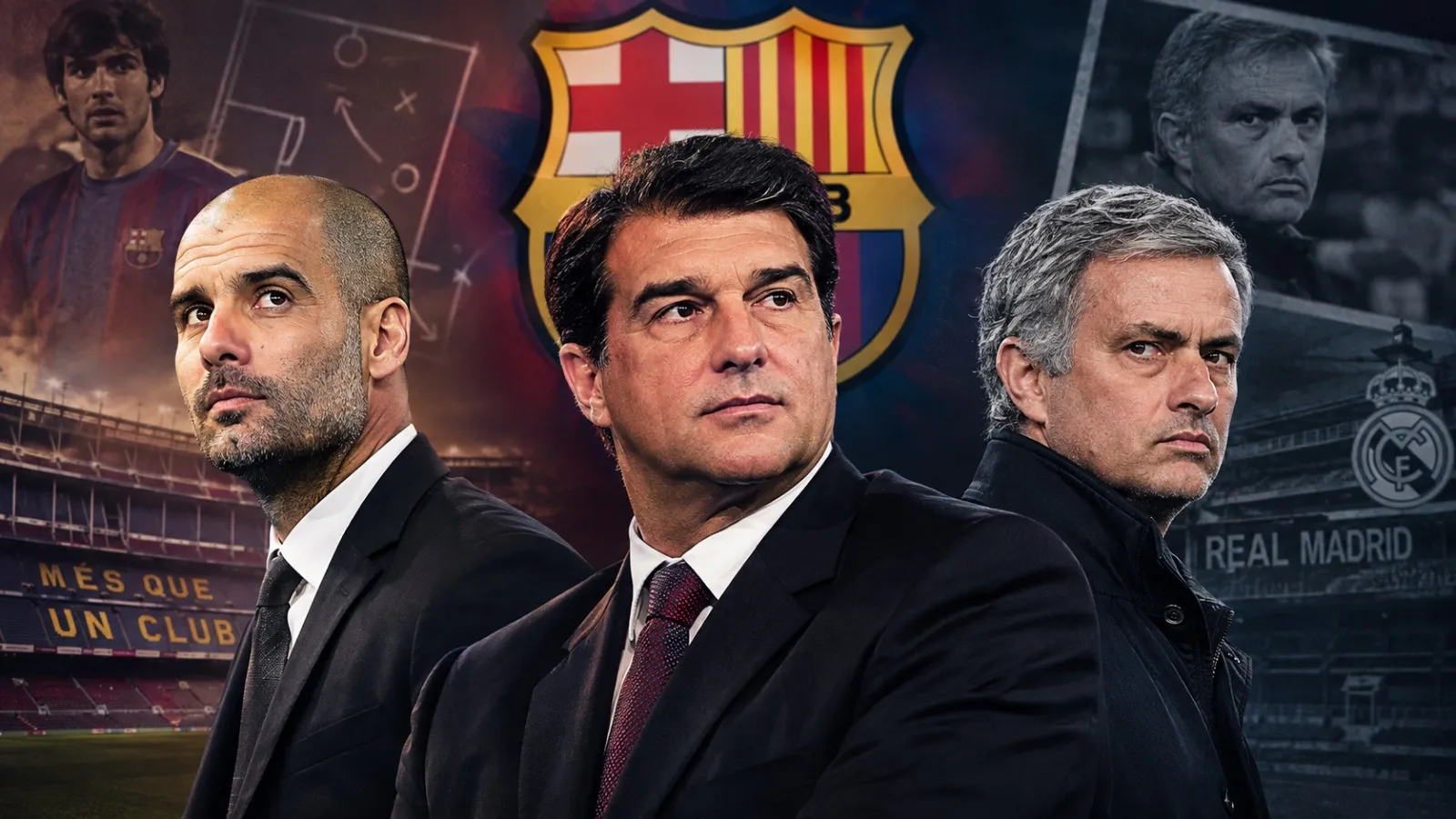
Football history is often shaped by decisions that seem relatively small at the time. One of the clearest examples came in Barcelona in 2008, when Joan Laporta and the club's sporting leadership had to decide who would replace Frank Rijkaard.
José Mourinho was among the strongest candidates. He had already built a reputation as one of Europe's most successful coaches, winning the Champions League with Porto and demonstrating his ability to manage high-pressure environments.
Yet Barcelona eventually chose a very different path.
The club appointed Pep Guardiola, a former Barcelona player who had been coaching Barcelona B and had no experience managing the first team.
Mourinho Was a Serious Candidate
As Rijkaard's time at Barcelona came to an end, the club considered several options for the next stage of its sporting project.
Mourinho's name attracted considerable attention. He was experienced, tactically accomplished and already familiar with Barcelona, having worked at the club earlier in his career.
For some people within the club, his experience made him an attractive option.
But there was another consideration: what kind of football did Barcelona want to build?
Laporta's Vision for Barcelona
Joan Laporta was interested in maintaining a football identity closely connected to Barcelona's traditional philosophy.
Guardiola represented that idea.
He had grown through the club's footballing system, understood its culture and was strongly associated with the positional and possession-based style that had become part of Barcelona's identity.
According to accounts from the period, Laporta consulted figures including Johan Cruyff and sporting director Txiki Begiristain before moving toward Guardiola's appointment.
The decision was not simply about choosing the more experienced coach. It was also about choosing the direction of the club.
A Risky Choice
Appointing Guardiola was a significant gamble.
He had never managed Barcelona's first team. Mourinho, by contrast, already had an impressive record at the highest level of European football.
Inside Barcelona, there were different opinions about the decision, with some figures preferring Mourinho's experience while others supported Guardiola's connection to the club's footballing philosophy.
Eventually, Laporta backed Guardiola.
The decision would prove to be one of the defining moments in Barcelona's modern history.
What Happened Next?
Guardiola's first season with Barcelona dramatically changed the perception of the decision.
In the 2008–09 season, Barcelona won La Liga, the Copa del Rey and the UEFA Champions League.
The team went on to win six major trophies in 2009, creating one of the most celebrated periods in the club's history.
Meanwhile, Mourinho continued his career elsewhere. He later joined Inter Milan, where he won another Champions League, before eventually becoming Real Madrid's manager.
The two coaches would later become central figures in one of football's most intense rivalries.
Guardiola at Barcelona.
Mourinho at Real Madrid.
The Butterfly Effect in Football
It is impossible to know what would have happened if Barcelona had chosen Mourinho instead.
Alternative history cannot be tested.
What can be established is that Laporta's decision in 2008 set Barcelona on a completely different path.
Choosing Guardiola was more than a coaching appointment. It represented a decision about the club's footballing identity, its philosophy and the kind of team Barcelona wanted to build.
A decision that initially looked like a gamble eventually became the beginning of one of the most successful eras in the club's history.
That is the butterfly effect in football: one decision, made at one particular moment, can influence an entire generation of the game.